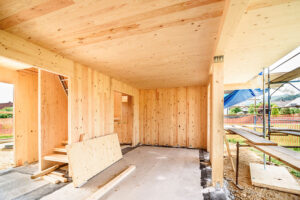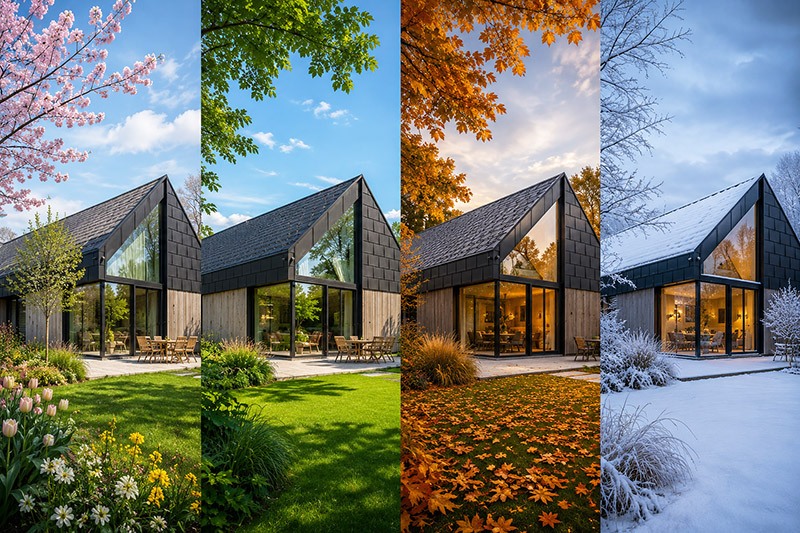
When people think about building a home, they tend to focus on the floor plan, the appearance of the house and the investment costs. Much less attention is given to how the home actually performs throughout the different seasons. How comfortable is it during the peak of summer heat? How quickly does the house warm up in winter? What does the indoor atmosphere feel like on rainy autumn days?
This is where the advantages of modern timber construction truly stand out in everyday living. Timber frame houses are not appealing only because of their fast construction process and energy efficiency, but above all because of the quality of living they provide throughout the entire year.
As a building material, wood affects the feeling of a space more than many people realize. Its natural properties help create a stable indoor climate, a pleasant temperature and a more balanced living environment in every season.
Why Does Living in a Timber House Feel Different
The difference between a timber house and a traditional masonry home is not visible only in the structure itself, but especially in the living experience. Many people entering a modern timber house for the first time notice that the spaces feel more pleasant and “softer.” The reason lies not only in the appearance of wood, but also in its physical properties.
Wood has lower thermal conductivity than concrete or brick, which means surfaces inside the home do not create a cold feeling. This becomes particularly noticeable in winter, when floors, walls and interior elements feel warmer and more comfortable to the touch.
Another important property of wood is its ability to regulate humidity. Wood can absorb some of the moisture from the air and later release it back into the space. As a result, the indoor climate feels more balanced, which positively affects living comfort and air quality.
In modern timber frame construction, the composition of the structure itself also plays an important role. Multi-layer systems include:
- a load-bearing timber structure,
- thermal insulation,
- airtight layers,
- a ventilation cavity,
- a facade system.
This type of construction provides effective thermal protection in both winter and summer. The house responds differently to outdoor temperatures compared to many older buildings, where temperature fluctuations, overheating or cold surface sensations are more common.
It is also important to emphasize that modern timber houses have little in common with outdated perceptions of older prefabricated buildings. Today’s timber frame construction is based on carefully designed details, structurally verified systems and modern energy-efficiency standards.
🌼 Spring: More Light and a Greater Sense of Openness
Spring is the season when the interior of a home begins to take on a completely different character. The days become longer, more natural light enters the space and the house starts to feel more connected to its surroundings.
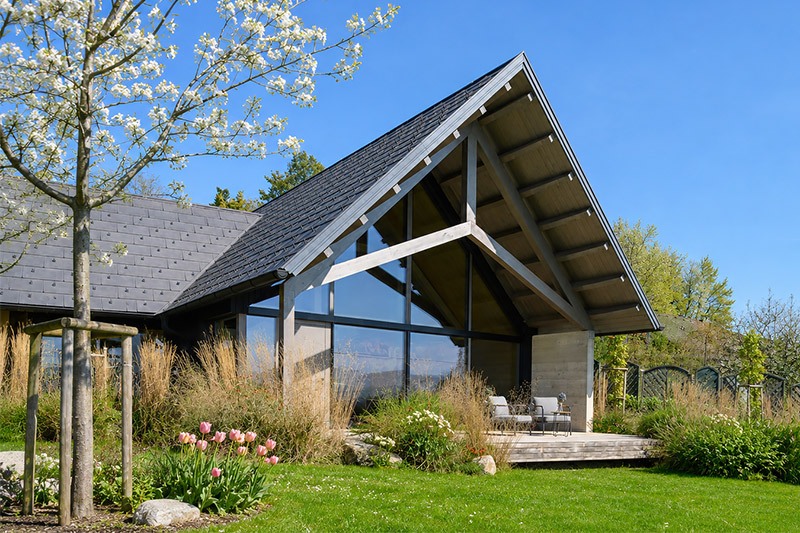
In modern timber houses, the connection with the outdoor environment is an important part of the architectural design. The planning approach typically includes:
- large glass surfaces,
- a connection to the terrace or garden,
- open living spaces,
- more natural light in the central areas of the home.
As a result, the interior gradually “opens up” toward the surroundings and feels even more connected to nature throughout the spring season. In this kind of setting, wood feels especially natural. Daylight highlights the texture of the material while the spaces feel calmer than interiors dominated by colder materials.
Air quality inside the home also becomes especially important during spring. Since temperatures change from day to day, morning ventilation and transitions between cooler and warmer periods are common. Wood helps create a more stable indoor environment during these fluctuations.
Many homeowners realize only after moving in that the quality of living is connected not only to the appearance of the house, but even more to the feeling the space creates during everyday life.
☀️ Summer: Comfortable Living Even on the Hottest Days
One of the most common concerns about timber houses is the issue of overheating in summer. Many people still mistakenly believe that timber homes heat up quickly during hot weather and struggle to maintain comfortable indoor temperatures.
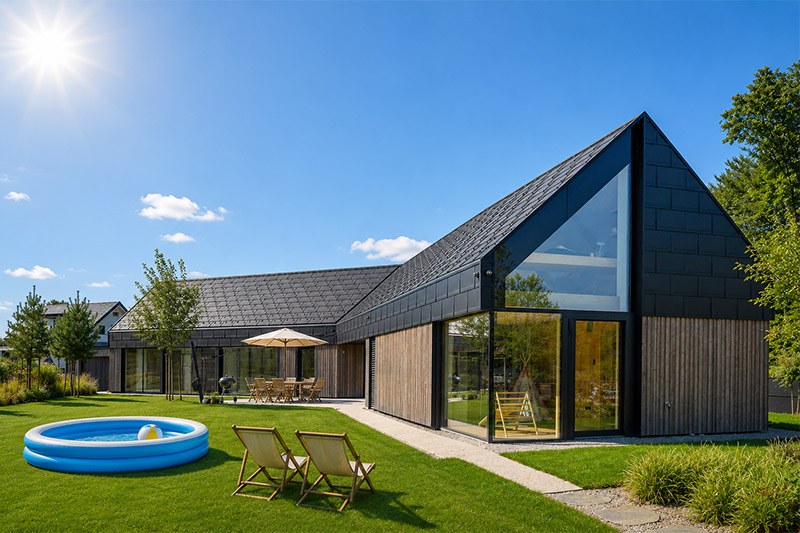
In practice, the situation is quite different. Modern timber frame construction is designed to effectively limit heat transfer through the structure. The thickness of the insulation, properly installed layers and good airtightness all play an important role.
Summer comfort, however, depends not only on the construction itself, but also on the overall design of the house. A well-planned home includes:
- proper orientation toward the sun,
- effective external shading,
- suitable roof overhangs,
- the possibility of night-time ventilation,
- a carefully considered arrangement of glass surfaces.
When all of these elements are properly coordinated, a timber house can maintain a comfortable indoor temperature even during the hottest days.
Another major difference compared to older buildings is the feeling of the air inside the home. In poorly insulated structures, summer can bring a heavy and stuffy indoor atmosphere because heat accumulates inside. In a modern timber house, the indoor climate tends to feel more balanced.
Ventilation also plays an important role. More and more timber houses include ventilation systems with heat recovery, allowing continuous air exchange without significant heat loss. Such systems help maintain fresher indoor air and reduce the feeling of summer stuffiness.
The faster thermal response of timber buildings also becomes noticeable during summer. If the house is ventilated properly in the evening, the interior cools down quickly and remains comfortable the following day.
This is one of the reasons why many timber house owners use air conditioning far less than they expected before moving in.
🍂 Autumn: When Warmth Feels Even More Noticeable
As temperatures begin to drop and the days grow shorter, the feeling of comfort at home becomes even more important. It is during autumn that many people notice the difference between living in a timber house and living in a conventionally built home most clearly.
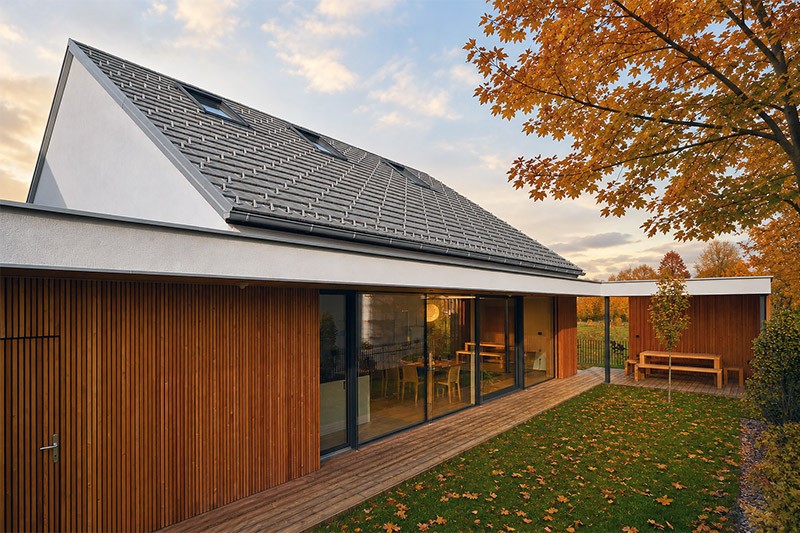
Wood naturally creates a warm visual effect. Combined with the softer autumn light, the interior feels even calmer and more inviting.
During the transition period between summer and winter, larger temperature fluctuations between day and night are common. A well-built timber frame house regulates these changes effectively, helping the indoor climate remain more stable.
An important advantage of timber houses during autumn is also the faster heating of interior spaces. Once the heating season begins, there is no long wait for the house to reach a comfortable temperature. Thanks to good insulation and airtightness, heat stays inside the home longer, which improves comfort while also reducing energy consumption.
Autumn is also the season when people begin spending more time indoors again. This makes the less visible aspects of living more important as well:
- air quality,
- the feeling of warmth from surrounding surfaces,
- room acoustics,
- indoor humidity levels.
As everyday life shifts back indoors during autumn, the feeling of a pleasant and balanced living environment becomes even more valuable.
❄️ Winter: Pleasant Warmth Without Dry Air
Winter is the season when construction quality becomes most apparent. In poorly insulated buildings, heat loss, cold walls, drafts and uneven heating quickly become noticeable.
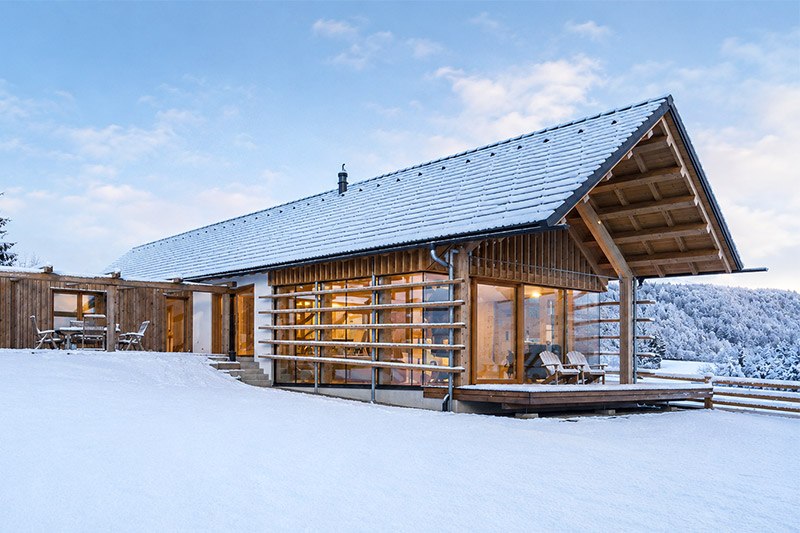
In a modern timber frame house, the experience feels different. Since wood has good thermal insulation properties, surfaces inside the home do not create a cold feeling. This has a strong effect on overall comfort because people perceive temperature not only through the air, but also through the surfaces around them.
Many people living in timber houses notice that the feeling of warmth is more evenly distributed. The spaces heat up quickly while the temperature remains stable throughout the day.
Timber construction also works particularly well with low-temperature heating systems such as underfloor heating. These systems allow heat to be distributed evenly without major temperature fluctuations.
Air quality is another important difference. In many older buildings, very dry indoor air is a common problem during winter, negatively affecting comfort and wellbeing. Thanks to its ability to regulate humidity, wood helps create a more balanced indoor climate.
This does not mean that a timber house automatically solves every issue related to moisture and ventilation. High-quality construction remains extremely important. A well-designed timber frame structure, properly executed details and effective ventilation are the foundation of long-term living quality.
The energy efficiency of modern timber frame construction also becomes especially noticeable during winter. Because of good insulation and reduced heat loss, less energy is needed for heating compared to older buildings. This is particularly important today due to rising energy costs and the growing emphasis on sustainable construction.
How Timber Frame Construction Improves Living Comfort
When we talk about comfort in a timber house, we are not referring only to the material itself, but to the entire construction system.
Modern timber frame construction is based on a carefully designed structure in which every layer has its own function. The goal is not only the structural stability of the building, but also the creation of a comfortable and energy-efficient living environment.
Important elements of modern timber construction include:
- high-quality thermal insulation,
- effective airtightness,
- prevention of thermal bridges,
- controlled ventilation,
- properly executed construction details.
The execution of details is one of the most important factors affecting the long-term quality of a building. Even the best design cannot deliver the desired results if the construction work is not carried out with sufficient precision.
In timber frame construction, it is also important to mention that this type of design allows a high degree of architectural flexibility. This makes it possible to adapt the house more effectively to the characteristics of the plot, sun exposure and the lifestyle of the family living in it.
A well-designed timber house is not comfortable during only one part of the year, but creates a high-quality living environment throughout every season.
A Home That Adapts to the Seasons
Living in a timber house throughout the year is not connected only to energy efficiency or the modern appearance of the building. Its greatest advantage becomes evident in the everyday living experience and in the way the house responds to different weather conditions.
The connection with nature in spring, a pleasant indoor climate in summer, a feeling of warmth in autumn and even heating in winter together create a home that adapts exceptionally well to every season.
Modern timber frame construction today provides a high level of comfort while preserving the advantages of a natural material that strongly influences the quality of living. It is also important to understand that living quality does not depend on a single factor.
The overall experience is shaped by the building structure, the ventilation system, thermal protection, architectural design and the execution of details. A well-designed timber house therefore creates a pleasant atmosphere not only during one part of the year, but enables comfortable living throughout all twelve months.
Many homeowners realize only after moving in that the difference between construction types is not connected solely to costs or the appearance of the building. What becomes truly important is the feeling inside the home:
- how quickly the house responds to temperature changes,
- what the indoor air feels like during winter,
- how comfortable the home remains during summer heat,
- how pleasant everyday living feels.
It is precisely in these qualities that wood, as a natural material, demonstrates its greatest advantages.
Modern timber houses are therefore attractive not only because of fast construction and low energy consumption. Their greatest value lies above all in the high quality of living they provide throughout the entire year – from summer freshness to the feeling of warmth in winter.