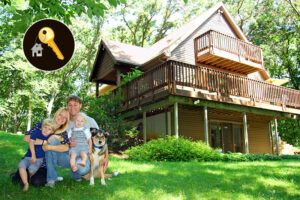
For most investors, deciding to build a wooden house is an important life step. Wood offers natural warmth, a healthy living environment and a sustainable approach, while also allowing for modern architectural solutions. However, living quality depends not only on the choice of material, but above all on how thoughtfully the wooden house plan is designed. It is during the planning phase that decisions are made which influence comfort, costs and functionality for decades to come.
Planning a wooden house is not merely a technical process. It is a comprehensive journey in which the investor’s wishes, the characteristics of the plot, legal requirements and professional expertise come together. A good wooden house plan must successfully combine all these elements into a coherent whole that enables comfortable and worry-free living.
The path from the first idea to the final solution consists of several clearly defined steps. When these steps are approached carefully and in the right order, the result is a house that not only impresses at move-in, but also maintains its value and usability over time.
First Step: Wishes, Needs and Lifestyle
Every well-designed home begins with a simple but essential question: how do you want to live? A wooden house should be tailored to the people who live in it, which makes it crucial to think about everyday habits as well as future needs.
It is helpful to consider the following questions:
- How many people will live in the house today and how many in 10 or 20 years?
- Do you need a home office, an extra room or a multifunctional space?
- Do you prefer an open, light-filled floor plan or more clearly separated rooms?
- How important are the terrace, the garden and a strong connection to nature?
- How important is the possibility of phased construction or future extensions?
A good wooden house plan takes both present and future needs into account. Decisions made too quickly at this stage often turn into limitations later on and can be difficult or costly to change.
The Plot as the Starting Point of Every Plan
Every plot has its own characteristics that must be respected during planning. Its size, shape, orientation and slope have a significant impact on the final design of the house. A well-considered relationship between the building and its surroundings allows optimal use of natural light, pleasant views and a strong connection between indoor spaces and the outdoor environment.
When designing a wooden house, the plan must take into account not only architectural preferences but also zoning regulations, setback requirements, permitted building dimensions and other restrictions. A thorough analysis of the plot at the very beginning helps avoid compromises later on that could reduce living quality.
Budget: A Realistic Framework for Smart Decisions
One of the most common mistakes in wooden house construction is addressing the budget too late. The financial framework should be defined from the outset, as it directly affects the size, design and technical solutions of the house.

A well-prepared plan allows the floor plan to be optimised without sacrificing functionality, supports a rational selection of materials and helps reduce unnecessary construction costs. This does not concern construction costs alone, but also long-term operating expenses. A thoughtfully designed wooden house plan can significantly lower heating, cooling and maintenance costs over time.
Standard or Custom Plan: Which Should You Choose?
When planning a wooden house, investors often face a key decision: choosing between a standard design or a custom-made plan.
Standard wooden house plans can be a good choice when:
- needs and expectations are relatively simple,
- the plot is standard,
- faster execution is a priority.
Custom wooden house plans, on the other hand, offer:
- full adaptation to your lifestyle,
- optimal use of the plot,
- greater architectural freedom.
In timber frame construction, a custom approach often provides clear advantages, as the structure allows a high degree of flexibility in spatial design.
Collaboration Between Architect and Contractor
Planning a wooden house is most effective when the architect and contractor work closely together from the very beginning. This approach ensures that the concept design is aligned early on with the technical specifics of timber frame construction. As a result, the risk of complications during construction is reduced and the final outcome remains true to the original vision.
A good wooden house plan develops gradually through dialogue, exchange of ideas and continuous refinement of solutions. That is why it is important for the investor to rely on experienced professionals throughout the process rather than navigating it alone.
Floor Plan, Structure and Everyday Functionality
The floor plan is the heart of every home, as it determines how the space functions in everyday life. One of the greatest advantages of timber frame houses is the possibility of open, bright and flexible floor plans. The structural system allows for larger spans and thinner walls, resulting in more usable space and greater freedom when organising rooms.
When designing the floor plan, several factors should be carefully considered:
- logical connections between spaces and clear separation of living, sleeping and technical areas,
- proper orientation of rooms in relation to sunlight and seasons,
- sufficient natural light in all living areas,
- well-planned placement of installations to ensure efficient heating, ventilation and plumbing,
- optimal room sizes without unnecessary corridors or unused areas,
- the possibility of future layout adjustments without major structural interventions.
In wooden house planning, the floor plan is never considered independently from the structure. Load-bearing elements, technical solutions and spatial design must work together seamlessly. Only this integrated approach can achieve a balance between architectural quality, everyday functionality and technically sound execution.
Energy Efficiency as an Integral Part of the Plan
Modern wooden house designs almost always prioritise energy efficiency, as it has a direct impact on living comfort and long-term operating costs. Due to its natural properties, wooden construction provides an excellent foundation for low-energy and passive houses, but its full potential can only be realised through careful, holistic planning.

Key decisions with long-lasting effects are made already at the planning stage. The orientation of the house influences solar gains and natural light, the design of the building envelope determines heat losses and the choice of windows plays an important role in both comfort and energy performance. It is also advisable to plan in advance for renewable energy systems such as heat pumps or solar power installations, as later upgrades are often more complex and more expensive.
A high-quality wooden house plan therefore treats energy efficiency not as an optional feature but as a core element of the overall design. This ensures comfortable living throughout the year while keeping heating, cooling and maintenance costs low over the entire lifespan of the house.
From Concept Design to Final Documentation
The journey from the first idea to the start of construction consists of several clearly defined phases, each with its own purpose. It begins with a concept design that establishes the basic architectural character of the house, the spatial layout and the relationship between the building and the plot. These early decisions guide the entire development of the project.
This is followed by the preparation of project documentation required for obtaining a building permit, where the concept is reviewed in terms of regulations, zoning rules and technical requirements. The final phase involves creating detailed construction documentation that precisely defines all structural, technical and execution details. This documentation forms the foundation for accurate, high-quality and predictable construction.
Well-prepared wooden house plans are essential for:
- smooth and efficient construction progress,
- clear coordination between all parties involved,
- reduced risk of errors and unexpected costs,
- adherence to agreed timelines,
- high-quality and technically correct execution,
- easier maintenance and future adaptations.
The Plan as the Foundation of a High-Quality Home
A wooden house is more than just a building. It is a place where everyday life unfolds, relationships grow and memories are created. That is why it is worth investing enough time in the planning process and thinking long term from the very beginning. A high-quality wooden house plan is not an unnecessary expense, but a thoughtful investment in comfort, energy efficiency and adaptability throughout different life stages.
When the investor’s wishes, the characteristics of the plot and professional expertise are brought together into a coherent whole, the result is a home that is not only visually refined but also functional, sustainable and pleasant to live in every day. A well-designed wooden house plan makes it possible to fully utilise the potential of timber frame construction, without unnecessary compromises or later corrections.

At Bauta, we believe that every high-quality wooden house starts with a good plan. With our knowledge and experience in timber frame construction, we help investors develop solutions tailored to their lifestyle. If you are considering building a wooden house, we are the right partner to guide you from the first ideas all the way to the final realisation of your new home.