


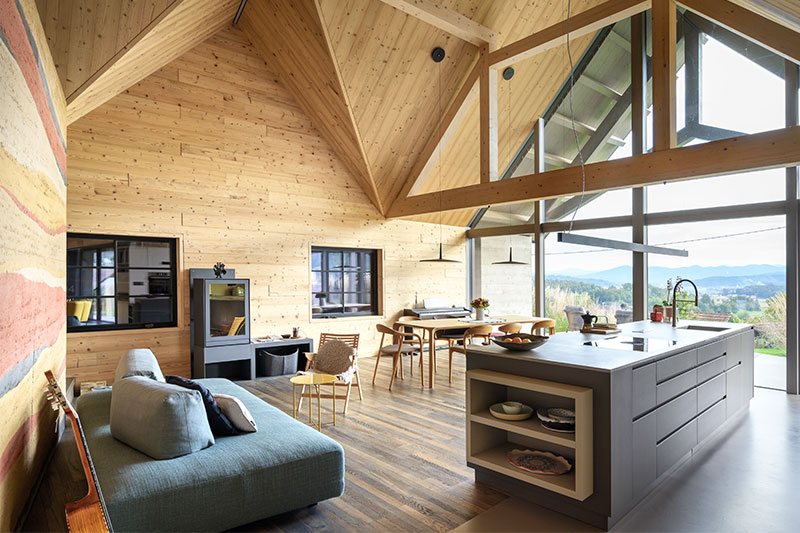
Wood is one of the oldest building materials used by humans for thousands of years. Despite the development of modern materials, its popularity has not declined — on the contrary, in recent decades it has once again gained recognition in modern architecture. The reason lies not only in its aesthetic advantages but also in the many natural properties that positively influence quality of life.
Wooden houses are therefore appealing not only because of their appearance but also because of the comfort they provide to their residents. The natural characteristics of wood influence indoor temperature, air quality, acoustics and overall living comfort. Below you will discover nine properties of wood that contribute to comfortable and healthy living in a wooden house.
1. Wood Creates a Warm Living Environment
One of the first things people notice in wooden houses is the feeling of warmth. Rooms with wooden surfaces often feel more homely, pleasant and natural. This sensation is not only psychological — it also has a clear physical explanation.
Wood has low thermal conductivity, meaning it transfers heat more slowly than many other building materials. Wooden surfaces feel pleasantly warm to the touch and do not create the cold sensation that can occur with materials such as concrete, ceramics or metal. This property contributes greatly to living comfort, as rooms with wood feel warmer and more welcoming.
2. Naturally Regulates Indoor Humidity
Wood has the ability to absorb and release moisture from the air, which allows it to help regulate relative humidity in a room to a certain extent. This property is known as hygroscopicity and is related to wood’s natural cellular structure. Wood fibers bind water vapor from the air and release it back into the environment when conditions change.
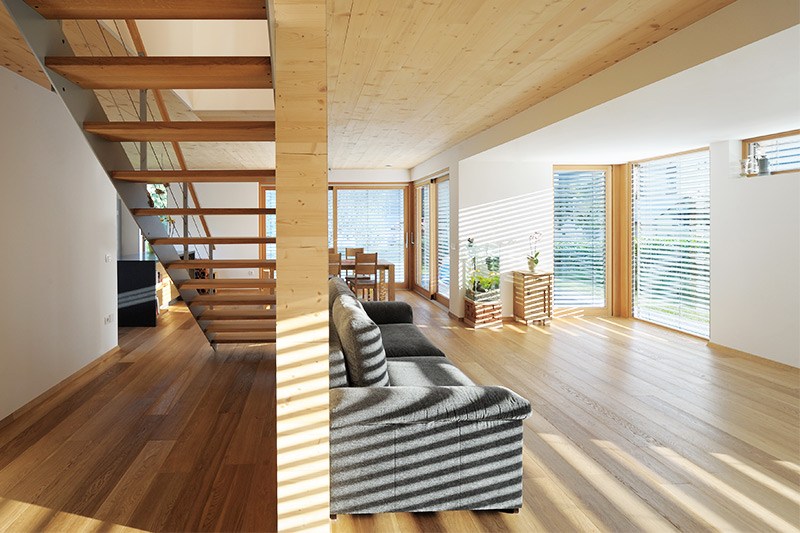
In practice, this means that wood absorbs excess moisture when humidity is high and gradually releases it when the air becomes drier. In this way, it helps maintain a more stable level of humidity indoors. Stable relative humidity is important for a healthy living environment because it reduces stuffiness and contributes to better air quality.
3. Contributes to a Healthier Indoor Microclimate
As a natural material, wood has a significant influence on the quality of the indoor environment. Due to its physical properties, it contributes to a healthy indoor microclimate that positively affects daily living and the well-being of residents.
The following properties of wood play an important role:
- the ability to regulate humidity in a room,
- a lower likelihood of stuffy indoor conditions,
- the pleasant temperature of wooden surfaces,
- a natural feeling of warmth in the space.
Such an indoor environment is also more suitable for people who are sensitive to very dry or overly humid air.
4. Provides Very Good Thermal Insulation
Wood is a natural insulator. Its cellular structure contains many tiny air pockets and air is a poor conductor of heat. Because of this, wooden structures reduce heat transfer through walls and contribute to more stable indoor temperatures.
Good thermal insulation offers several advantages:
- reduced heat loss through the structure,
- more uniform temperatures in indoor spaces,
- improved energy efficiency of the building.
In modern timber construction, the natural insulating properties of wood are often complemented with additional insulation materials. The combination of these solutions allows for the construction of highly energy-efficient houses that help reduce energy consumption for heating and cooling.
5. Positively Influences Room Acoustics
Acoustics is an important but often overlooked aspect of living comfort. Materials in a space influence how sound travels, reflects and is absorbed. If surfaces are mostly hard and smooth, sound reflects more strongly, which can create unpleasant echoes and reduce acoustic comfort.
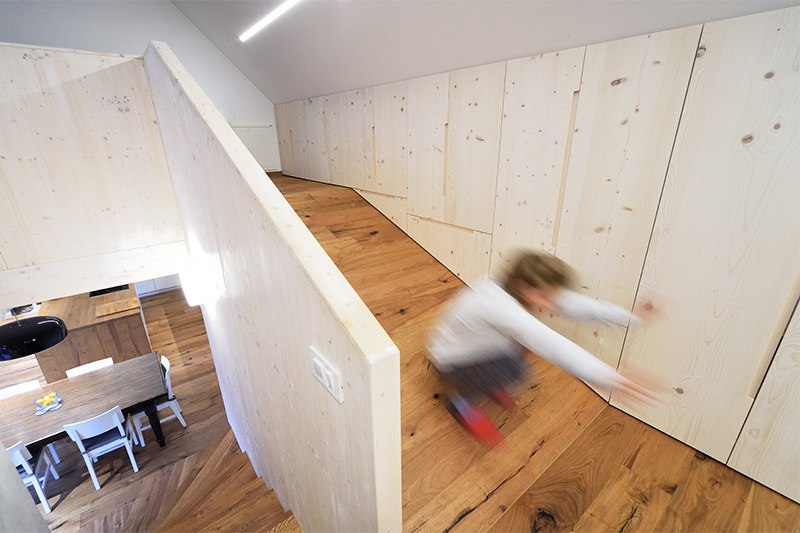
Wood has the ability to partially absorb sound, helping reduce echo and regulate the spread of sound waves. Rooms with wooden surfaces are therefore often acoustically more balanced, resulting in more even and less reverberant sound.
6. Exceptionally Strong for Its Weight
Wood is a surprisingly strong material. Although relatively lightweight, it has an excellent strength-to-weight ratio, meaning wooden structures can efficiently withstand various loads.
This property allows for the construction of stable and reliable structures while also enabling more rational sizing of structural elements. Due to this favorable strength-to-weight ratio, wood has long been an important building material used even in demanding structural applications.
7. A Naturally Flexible Material
Wood is an elastic and flexible material, meaning it can withstand certain deformations without structural damage. This property is especially important for buildings that are exposed to various loads during use.
The flexibility of wood allows structures to respond well to wind, temperature fluctuations and other dynamic forces. Because of this material flexibility, wooden structures remain stable even under demanding conditions.
8. A Renewable Natural Material
Wood is one of the few building materials that is renewable in nature. Trees continuously regenerate wood mass as they grow, which means that with responsible and sustainable forest management this natural resource can be used long-term.
In addition to being renewable, wood also offers several environmental advantages:
- during growth, trees absorb carbon dioxide which is then stored as carbon in wood even while it is used in structures,
- wood processing requires relatively little energy compared to many other building materials,
- wooden elements can be reused, for example during renovations or in new constructions,
- wood can be recycled or used for energy at the end of a product’s life cycle.
Because of these properties, wood plays an important role in sustainable construction and in reducing the environmental impact of the building sector. Using wood therefore represents not only a high-quality living material but also a more responsible approach to natural resources.
9. Brings Natural Aesthetics into a Space
Wood has a unique structure, color and texture that are difficult to replicate with other materials. As a natural material, each piece of wood is slightly different — growth rings, grain patterns and color tones vary. This natural diversity gives each space a distinctive character and a sense of warmth.
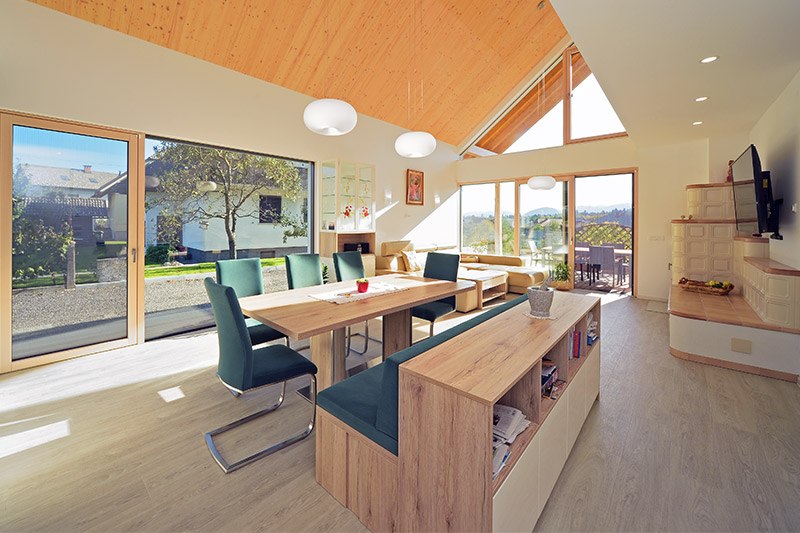
The presence of wood in a room creates a feeling of connection with nature. Natural patterns, warm tones and the texture of wood contribute to a pleasant atmosphere, a sense of homeliness and visually appealing interiors. For this reason, wood is also very popular in interior design.
Why Wood Is an Excellent Choice for a Modern Home
When all these properties of wood are considered together, we get a material that strongly influences quality of living. Wooden houses provide a stable indoor climate, balanced humidity levels and comfortable temperatures. The combination of these characteristics creates favorable living conditions throughout the year.
For this reason, wood remains one of the most valued building materials in modern architecture. Its natural origin, sustainability and strong structural properties make it possible to create homes that are not only aesthetically appealing but also comfortable for everyday living.
At Bauta d.o.o., we have been designing and building modern wooden houses for many years. Through our experience, we understand how important it is that the natural properties of wood are properly utilized in both the design and construction of a building.
If you are considering living in a wooden house or are interested in the possibilities of modern timber frame construction, feel free to contact us. We will be happy to help you on your journey toward a home where living is comfortable, pleasant and healthy.


